We’re here to help
At Jax Vents, we want you to feel informed and confident about the services that help keep your home safe and efficient. Here are some of the questions we hear most often from customers across Jacksonville and Northeast Florida.
According to the National Fire Protection Association:
- Dryers and washing machines cause an average of 15,970 fires each year, with dryers causing 92% of them and an average of $200 million in property damage. *
- One-third (32 percent) of dryer fires were caused by a failure to clean. This appears to be mainly lint build-up, as 27 percent of dryer fires started when dust, fiber or lint ignited. *
* Data from NFPA website
What kind of equipment do you use?
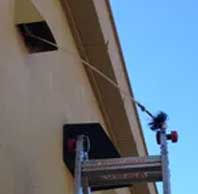
Our cleaning equipment is simple and effective. Unless there is a problem with the vent pipe or there is a booster fan installed we will be able to get our brush all the way through your dryer vent .
Our powerful vacuum system will collect the lint as the brush travels through the vent pipe.
The lint screen or filter in most dryers is designed to catch only the largest particles of lint. About 50% of the lint. The other 50% of the lint is very fine particles that adhere to the inside of the dryer and the vent system.
When it comes to keeping your home safe and your systems running properly, hiring a professional makes all the difference. At Jax Vents, we bring years of experience, specialized tools, and a thorough understanding of how dryer vents and chimneys work—something most homeowners simply don’t have the time or equipment to tackle on their own.
What kind of cleaning or types of vents do you service?
With a professional cleaning, you get a complete service that restores safe airflow, helps your appliances run better, and protects your home from potential damage. A DIY attempt might clear some visible lint or soot, but it often misses hidden buildup deep inside vents or chimneys. That means lingering fire hazards, reduced efficiency, and the chance of costly repairs down the road.
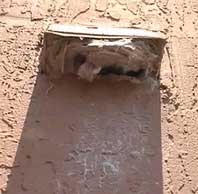
Hooded vents on the side of buildings can be problematic because sometimes they are recessed in stucco during construction and lose vent opening capacity. They can be cleaned and will work as well as their original installation will allow.
These vents can be problematic because sometimes they are recessed in stucco during construction and lose vent opening capacity. They can be cleaned and will work as well as their original installation will allow.
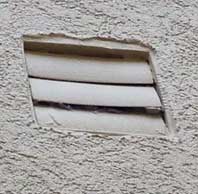
These louvers were painted shut. The paint dried on the louvers sticking them together and caused a restriction at the end of the vent pipe. We see this a lot. Again these can be cleaned and made to work.
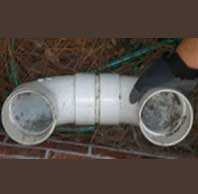
These PVC vents that travel under the slab can trap moisture from the drying process and fill up with condensation and lint. These can be extremely messy and stinky but they can be cleaned up and made to work well.
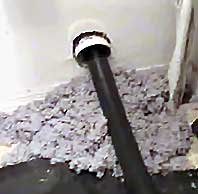
Most of the time we will need to pull out the dryer to access the vent pipe for cleaning. Again here, we let the lint fall out of the vent pipe as we brushed it before we inserted the vacuum hose to demonstrate how much lint was trapped in the vent pipe.
We always re connect the dryer securely and put it back in place to your satisfaction. We always vacuum the work area before finishing up. Even behind the washing machine.
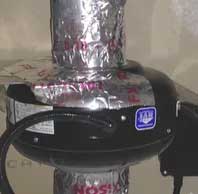
Do you have a booster fan in your dryer vent system? Some homes, condo and apartment buildings with extremely long vent pipes will have booster fans installed.
Most of the time these are not installed with vent cleaning in mind and there is not much access for cleaning equipment to be used. We will always do the best we can but sometimes there is nothing we can do with booster fans.
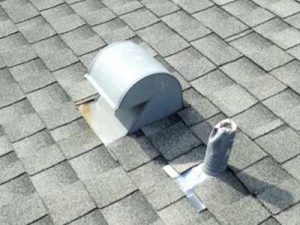 This is one of the most common types of dryer vent types that we clean and we do have to get on the roof for part of this service. Cleaning this cap along with brushing out the pipe (above photo) can make your dryer work better and reduce the risk of fire hazard.
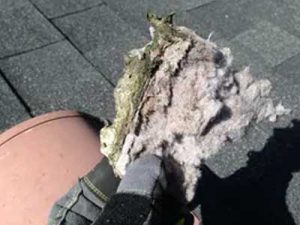 This tough blockage is what we usually find in the cap on the roof. It can not be reached by brushing from the bottom only and will stay in place until someone gets on the roof and clears the cap by hand. Sometimes there is a screen in this cap that should have been removed during installation. These screens become 100% blocked with lint in a short amount of time and we will always recommend that these screens be removed.
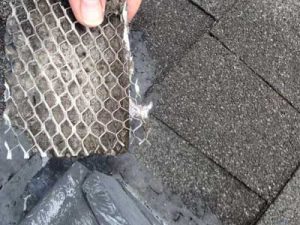 This is a screen that was removed from a vent cap. It had the vent 100% restricted. We see this a lot. When we go on the roof we check the cap for restrictions like lint buildup and screens left in the cap. We also check to make sure the backdraft flap is operating normally inside the cap.
We’re also fully licensed and insured, so you can trust that every job is done safely and correctly. Choosing Jax Vents means choosing peace of mind—knowing your home is cared for by experts who treat it like their own.